The return of the dual-purpose chicken
Blog
For generations, chickens were true farm all-rounders. They laid eggs, provided meat, scratched through manure to control pests and hatched their own chicks. They were part of a balanced system, not pushed to biological extremes.
Modern factory farming changed that.
Over time, the poultry industry divided chickens into two very different types. Some are bred to lay as many eggs as possible. Others are bred to grow quickly for meat. Each bird is selected for one purpose, and that comes at a cost to their welfare.
At Planton Farm in Shropshire, the Impeckable Project is taking a different approach. Instead of pushing birds to extremes, the farm is bringing back dual purpose breeds that can lay well and grow steadily for meat, without the health problems seen in intensive systems.
What are dual purpose chickens?
Dual purpose chickens are breeds raised for both eggs and meat. They are not bred to maximise one single trait. They lay fewer eggs than industrial hens, but they stay healthier and can later provide good quality meat. It is a more balanced way of farming.
That balance matters.

"When you select chickens only for one trait, egg laying or rapid growth, you create welfare problems," explains Claire Hill, who directs the DEFRA-funded project. "Layers deplete their bodies producing excessive eggs, while broilers grow so fast, they can barely support their weight."
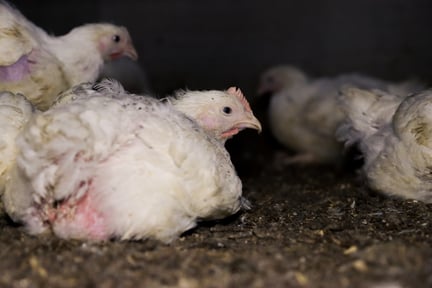
Industrial laying hens can produce more than 300 eggs a year. That level of output puts strain on their bodies. Fast growing broilers are usually slaughtered at just five to seven weeks old. Many struggle to walk because their legs cannot properly support their rapid weight gain.
Addressing built in cruelty
One of the most troubling parts of industrial egg production is the routine killing of male chicks. Males from laying breeds cannot lay eggs and do not grow efficiently for meat. Because of that, they are usually killed shortly after hatching.
Dual purpose systems avoid this. Male chicks are raised for meat instead. It reduces unnecessary killing and removes a practice that is built into industrial egg production.

Farming with nature
Welfare at Planton Farm goes beyond breeding choices.
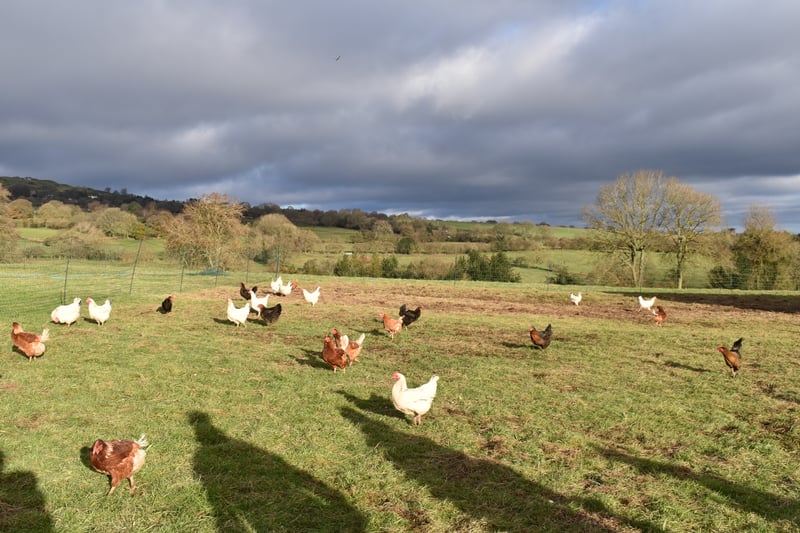
Chickens live in small, moveable arcs that are regularly shifted across pasture. This gives them access to fresh grass and insects, while their manure helps fertilise the soil. The farm has also planted fruit and nut trees, creating shelter and natural food sources for the birds.
Here, chickens can scratch, peck and explore. These are simple, instinctive behaviours, but they are impossible in factory farming systems where thousands of birds are kept indoors.
The Impeckable Project raises breeds such as Rhode Island Reds, Buff Orpingtons and Sussex. These birds lay around 200 to 250 eggs a year. That is fewer than industrial layers, but they remain productive. When their laying slows after a couple of years, they provide substantial meat, unlike commercial laying hens, which yield very little.
Economically, the system is steady rather than extreme. Eggs or meat alone may not match specialised industrial output, but together they create a workable model. Because the birds live outdoors, eat varied diets and are not pushed to their limits, they rarely need medication.
"What makes this approach revolutionary is actually its traditional roots," says Annie Rayner, Hill's farming partner. "We're rediscovering farming rhythms that worked for centuries before industrial agriculture fragmented everything into specialised components."
A practical alternative to factory farming
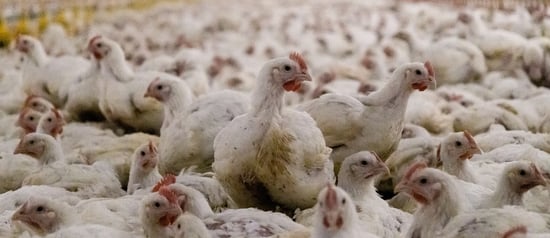
Factory farming takes a very different approach. Thousands of birds are kept indoors in large sheds. They are bred for output and denied the chance to behave naturally. Their bodies are pushed to produce as much as possible, as quickly as possible.
Dual purpose chickens are not about looking backwards. They show that there is a workable alternative to extreme breeding and built in cruelty. With proper government support, the UK could move away from factory farming and towards systems that protect animal welfare and support healthier land.
Food production does not have to depend on suffering. Farms like Planton are already showing that a better approach is possible.
Call for an end to cruel factory farming
Sign our petition to the UK government and let them know that there is no future for factory farming.
Read more about a Just Transition
-
Plans to relax factory farm planning rules raise concerns
News
Reports that the UK government is considering relaxing planning rules for factory farms following industry lobbying are deeply...
-
The false divide between farming and rewilding explained
Blog
On the 18th of March the Government launched its Land Use Framework, reigniting debate about how Britain manages...
-
Bad news for chickens as companies drop Better Chicken...
Blog
18 companies have dropped the Better Chicken Commitment, stepping back from key welfare standards for millions of chickens.