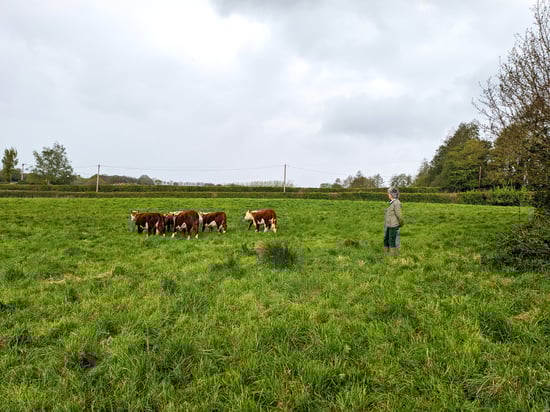
It’s 9am at Romshed Farm in Kent, and farmer Fidelity Weston is moving cattle – not to a different field, but to a fresh strip within the same one.
The approach is known as holistic planned grazing, sometimes called mob grazing. With a handful of lightweight electric fence posts and a reel of wire, she sections off a new patch of grass and opens the gap for the waiting herd.
"The cattle know the routine," she smiles as they rush towards the fresh growth. "They’re much more excited about this new growth than what they're left behind."
At first glance, moving animals every day might sound like more work than leaving them in one field for weeks at a time. But here, that small daily shift is transforming the soil, improving animal health and strengthening the farm’s resilience.
"In nature, herds bunch together for safety and move often to find fresh grass," Weston explains. "We're copying that pattern."
The system itself is simple. Cattle graze one strip for around 24 hours before moving on. The grazed area is then left to rest for 30 to 60 days before animals return.
That rest period is crucial. It allows plants to recover fully and grow deeper roots. Stronger roots feed soil microbes, improve structure and increase organic matter. Over time, this helps soil hold more water during heavy rain and stay moist for longer in dry spells.
It's not about working harder. It's about working smarter with nature.
Curious about what a Just Transition looks like?
A Just Transition is not about less farming - it’s about better farming, where people, animals, and the planet thrive.
Visit our Just Transition Hub for more informationThat matters because soil is under pressure. Around the world, a third of topsoil has been lost in the past century. The United Nations has warned that, if degradation continues, we could be facing just a few decades of harvests. On farms like Romshed, rebuilding soil is not an abstract idea – it’s practical, visible work happening every day.
"Before we started, the soil was hard and lifeless," Weston says, digging into rich, crumbly earth. "Now we’re building an inch of topsoil every few years."
The animals benefit as well. Moving daily disrupts parasite life cycles, meaning fewer worms survive to reinfect the herd. Romshed also rotates sheep and cattle across the same land. Because most parasites affect only one species, this further reduces disease pressure. As a result, the farm has cut worming treatments by 80%.
Healthier pasture also means cattle can express more natural behaviours. They graze fresh forage regularly, move as a herd and spend less time standing on overgrazed ground. For Weston, soil health and animal welfare are closely linked – you cannot improve one without improving the other.
There are financial benefits too. While daily moves require planning and consistency, they reduce spending on feed and veterinary treatments. Fresh pasture offers better nutrition, and healthier soils grow more grass. In turn, that means the farm can support more animals from the same land, without relying on higher inputs.
"It's not about working harder," Weston says. "It’s about working smarter with nature."
Read more about a Just Transition for UK Farming
-
Bad news for chickens as companies drop Better Chicken...
Blog
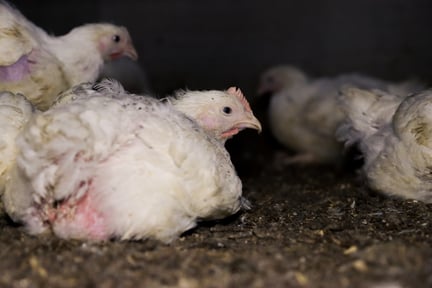
18 companies have dropped the Better Chicken Commitment, stepping back from key welfare standards for millions of chickens.
-
Healthy farmers, healthy animals – why a just transition...
Blog
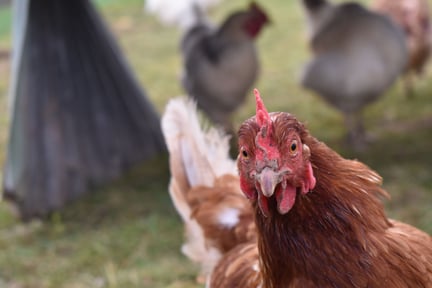
Explore how farmer wellbeing and animal welfare are connected, and why a just transition in UK farming is...