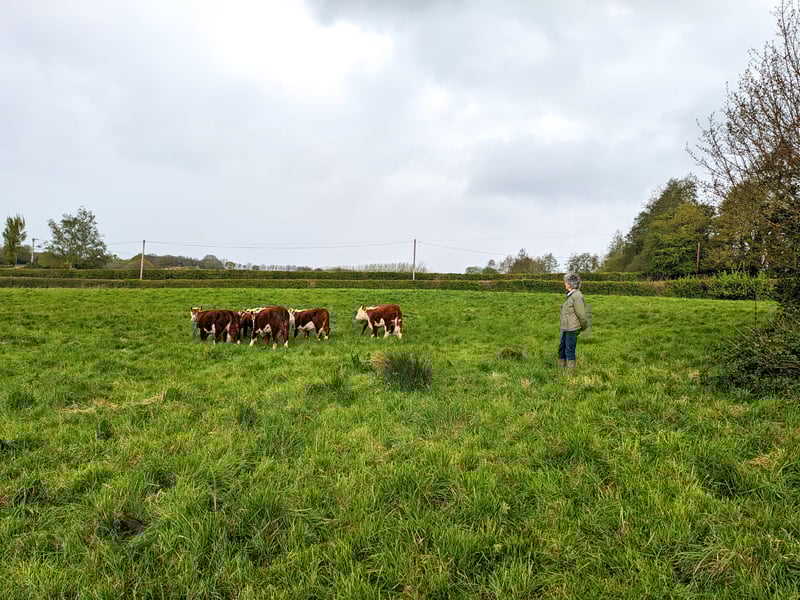
Cows among trees at Romshed Farm in Kent
Blog
At Romshed Farm near Sevenoaks, cattle graze among trees as part of a regenerative system that restores soil, supports wildlife and challenges factory farming.
When you visit Romshed Farm in Kent, something feels different. Instead of wide open pasture with cattle standing in the sun, you see cows grazing between rows of trees. Birds move through the branches. The ground is thick with grasses and herbs, and the land feels alive.
This is silvopasture, and it is part of a wider regenerative approach that has shaped the farm for decades.
"People often say trees and livestock don’t mix," says Fidelity Weston, who runs the 200 acre organic farm. "We’re proving they work brilliantly together."
Fidelity has worked this land for 40 years. Over that time, her focus has shifted beyond simply producing food. Regenerative farming looks at the whole system. It draws on long established agricultural knowledge while working with nature to restore soil, increase biodiversity and reduce climate harm.
At Romshed, cattle graze in pastures planted with carefully spaced rows of trees. Electric fencing creates narrow grazing strips that include both grass and tree cover. The herd is moved regularly to fresh ground, allowing previously grazed areas to rest and recover.
This movement is deliberate. It mirrors natural grazing patterns and helps stimulate plant growth. Manure is distributed across the land, returning nutrients to the soil. The result is a system where livestock play an active role in improving the health of the farm.
The cows also benefit directly. Around 15 to 30 percent of their diet comes from tree leaves and bark. This varied diet supports digestion and overall health. Some tree species can help reduce parasites. A more diverse diet can also contribute to lower methane emissions.
Underpinning all of this is the soil. At Romshed Farm, soil is treated as a living system. It is rich with microorganisms that break down organic matter and make nutrients available to plants. By avoiding chemicals and limiting disturbance, the soil retains its structure and organic content. This improves water retention and supports a diverse range of plant life.
Healthy soil leads to healthy pasture. Healthy pasture supports healthier animals.

The trees bring further benefits. Their roots help stabilise the soil and reduce erosion. Their branches provide shade in summer and shelter during heavy rain and strong winds. Birds and insects use them for habitat, increasing biodiversity across the farm.
The relationship works both ways. Grazing prevents grasses from overwhelming young saplings. Manure fertilises the soil. Careful timing ensures cattle do not damage the trees. Rather than competing for space, livestock and trees support each other.
Managing this system requires planning and daily attention. Fences are moved regularly. Grazing patterns are adjusted with the seasons and decisions are guided by close observation of the land and the animals.
This isn’t just about food, it’s about creating a countryside where farming and nature thrive together.
The contrast with factory farming is clear. Intensive systems are built around maximising output, often at significant cost to soil health, biodiversity and animal welfare. Regenerative farming offers a different direction. It restores rather than depletes. It recognises that farming can help address climate change and biodiversity loss rather than contribute to them.
For people buying food, this matters. Crops grown in healthy soil can be more nutrient rich. Animals raised in systems that allow natural behaviour experience better welfare. Farms that build soil carbon and protect water contribute to healthier landscapes.
Romshed Farm shows that trees and livestock do mix. It shows that farming with nature is not an idealistic concept but a practical and productive approach.
"This isn’t just about food," Weston says, watching her Red Devon cattle under oak trees. "It’s about creating a countryside where farming and nature thrive together."
Read more about a Just Transition for UK Farming
-
Plans to relax factory farm planning rules raise concerns
News
Reports that the UK government is considering relaxing planning rules for factory farms following industry lobbying are deeply...
-
The false divide between farming and rewilding explained
Blog
On the 18th of March the Government launched its Land Use Framework, reigniting debate about how Britain manages...
-
Bad news for chickens as companies drop Better Chicken...
Blog
18 companies have dropped the Better Chicken Commitment, stepping back from key welfare standards for millions of chickens.