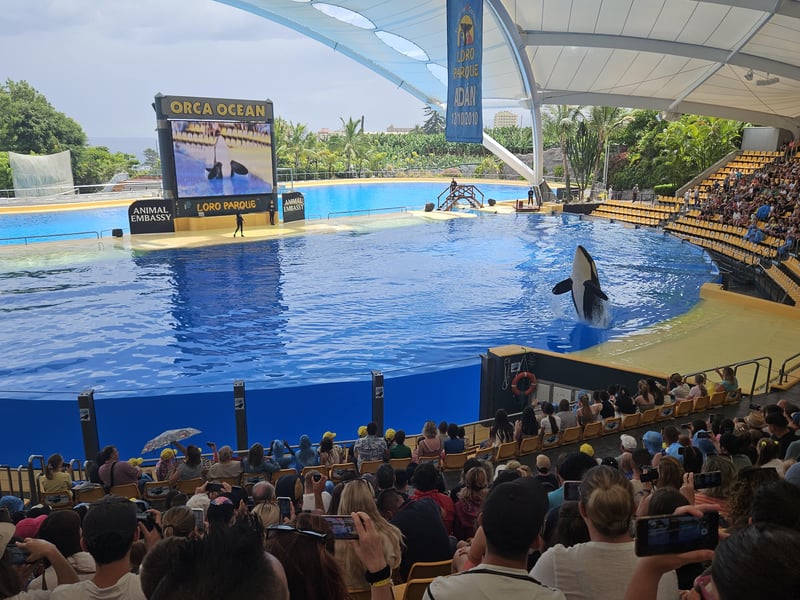
A worrying development emerged on Friday (15 May) for Wikie and Keijo the two remaining orcas at the now-closed Marineland Antibes. Reports indicate that plans may be under way to transfer the animals to Tenerife’s notorious entertainment venue, Loro Parque, before the end of June.
It remains unclear whether Spanish authorities have authorised the move which would reverse their earlier position that Spain does not possess adequate facilities for these animals.
The park’s management announced this following a visit from French minister Mathieu Lefèvre. The news has not yet been officially confirmed by the French government.
Loro Parque has long been criticised for its treatment of captive orcas and has seen the deaths of four animals since 2021. It was also previously deemed unsuitable by Spain’s scientific authority under CITES, which reportedly found it did not meet minimum standards for space, volume and depth.
France’s 2021 legislation to phase out the use of wild animals in marine parks should have marked a turning point for animals like Wikie and Keijo. Instead, their future has remained uncertain since Marineland Antibes closed in January 2025. Facilities were given until December 2026 to rehome cetaceans, but a sanctuary option is still under development.
It was hoped that Wikie, 23, and her 11-year-old son Keijo would remain at Marineland until a seaside sanctuary became available.
Instead, they are now expected to be transferred to Loro Parque, where they may be used for performances and potentially breeding alongside the park’s existing orcas, including Morgan and her calf Teno, who turned one on 31 March.
Experts have raised serious concerns about the impact this move could have on the animals. Orcas are highly intelligent marine mammals with complex social structures, and introducing two new individuals into an already fragile group, particularly alongside a young calf, risks increased stress and aggression.
A systematic failure
Wikie and Keijo have been failed at every stage by those that have profited from their captivity.
Parques Reunidos, the company that acquired Marineland in 2006, should have taken responsibility for their care until a sanctuary solution was viable. The French government introduced important legislation but failed to ensure that alternatives were in place, ultimately undermining the intent of its own policy.
Travel companies such as TUI Group continue to promote venues like Loro Parque, which actively breed orcas and perpetuate the captive cetacean industry.
Breeding at Loro Parque
Orcas are highly intelligent, social animals with complex family structures. It is widely recognised they cannot thrive in captivity.
Despite global public outcry following the documentary Blackfish, Loro Parque has confirmed it has no plans to stop breeding. Their most recent calf, Teno, born to Morgan, turned one on 31 March.
Teno has recently been introduced to adult males Tekoa and Adan. Introducing Wikie and Keijo into this already fragile and complex group is widely considered irresponsible and potentially dangerous.
Dr Jan Schmidt-Burbach, World Animal Protection’s Director of Wildlife Research and Veterinary Expertise Programmes, said:
“It is unprofessional and irresponsible to now bring another two orcas into the mix. Adding Wikie and Keijo will further destabilise the already fragile group at Loro Parque and likely lead to significant stress or aggression, with a young calf in the midst. Loro Parque was already far from adequate for the current three adult orcas and a calf. Adding two new adult orcas will significantly worsen the situation and lead to suffering.”
Katheryn Wise, World Animal Protection’s Wildlife Campaign Manager, said:
“We urge the French Ministry, who have been trying to find a solution for these orcas, to do all that they can to ensure that the intent of their legislation is followed and Wikie and Keijo are not used for breeding purposes. It is already tragic that these animals continue to face a lifetime in a tiny barren tank performing for tourists, let alone be used to perpetuate this cruel industry. It is more important than ever to make this the last generation of whales and dolphins in captivity.”
The wider picture
Today, 55 orcas remain in marine parks worldwide. In Europe, just six remain in captivity. With the addition of Wikie and Keijo, all captive orcas in Europe will now be held at Loro Parque.
While countries including France, Belgium, Canada and Mexico have taken steps to end the use of whales and dolphins for entertainment, Loro Parque continues to breed orcas.
As one of the world’s largest tour operators, TUI Group continues to sell tickets to venues like Loro Parque, despite growing public opposition.
With marine parks closing worldwide, this should be the last generation of captive orcas. But as long as companies continue to promote these attractions, the cycle of suffering will continue.
Add your voice and call on TUI to stop supporting captive whale and dolphin entertainment.
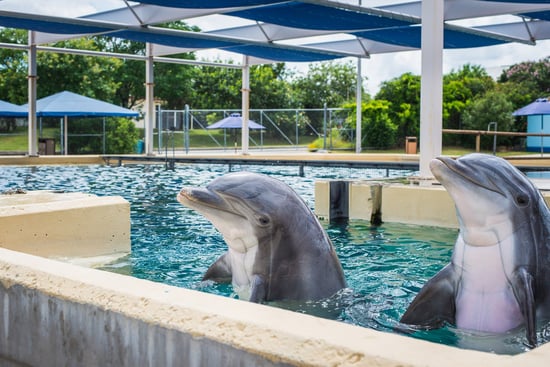
Join the boycott: Stop TUI Group's dolphin cruelty
By joining our boycott, you’re taking a stand against dolphin exploitation. Pledge to avoid all TUI products until they end their support for dolphin captivity.
Boycott TUI Group now