
Animal welfare campaigners are marking the first birthday of Teno, an orca born at Loro Parque in Tenerife, by urging tourists not to support whale and dolphin shows.
Teno was born at Loro Parque on 31 March 2025 and has already started performing for visitors. He is likely to spend his entire life confined to a barren tank for entertainment. He will never see the ocean or experience freedom.
His mother, Morgan, was rescued off the Dutch coast in 2010 with the intention of rehabilitation and release. Instead, she was transferred to Loro Parque, where she now performs in daily shows and has been used for breeding.
Campaigners say Teno started performing when he was just months old. His birth highlights the continued breeding of whales and dolphins in captivity, despite growing public opposition and legal restrictions in countries including the UK, Canada, France, Belgium and Mexico.
Unlike wild orcas, Teno will never hunt, travel vast distances or live within a natural social group. He faces a lifetime in an artificial environment designed for people's entertainment.
Morgan’s story
Morgan’s case has long been a source of concern. After being found underweight in the wild, she was rescued under a permit intended for rehabilitation and release, but was never returned to the ocean.
She previously gave birth to Ula, who was rejected and hand-reared before dying shortly before her third birthday.
Today, Morgan is still presented as a rescued orca in shows, despite having been taken from the wild and kept for entertainment.
A global issue
The welfare of captive orcas continues to face global scrutiny.
At Marineland Antibes in France, which closed in January 2025, two orcas remain in deteriorating tanks while authorities search for a long-term solution. Their prolonged captivity means they cannot be released into the wild and sanctuary options are still being developed.
Loro Parque was rejected as a relocation option by Spain’s scientific authority under CITES, which reportedly found that the venue did not meet minimum standards in terms of area, volume and depth for marine mammals.
Despite ongoing concerns, a Loro Parque spokesperson stated at an orca symposium in February 2025 that the park has no plans to stop breeding.
Orcas are highly intelligent animals with complex social structures and strong family bonds. It is widely recognised that they cannot thrive in captivity.
Following global outcry after the documentary Blackfish, SeaWorld announced it would end orca breeding.
Today, around 60 orcas remain in marine parks worldwide. In Europe, just six are still held in captivity: four at Loro Parque and two at Marineland Antibes, which has been closed to the public for over a year.
Katheryn Wise, Wildlife Campaigns Manager at World Animal Protection, said:
“Anyone visiting Tenerife this year should think twice before going to see the ‘cute baby orca’ at Loro Parque. When the music stops and the audience leaves, Teno will still be circling that same empty pool for decades. A birthday should be a time for celebration but in Teno’s case it simply marks the first of many years confined to a barren tank.
“Around the world, attitudes are changing. Venues are closing, many travel companies have stopped promoting these attractions and countries are banning whale and dolphin captivity. Yet TUI continues to profit from them by exploiting loopholes in its own animal welfare policy.”
Tourism and industry responsibility
Tourism continues to drive demand for captive dolphin and whale shows.
As one of the world’s largest tour operators, TUI Group plays a significant role in promoting venues like Loro Parque.
Despite updating its animal welfare policy in November 2024 to state that it would not sell venues that breed whales and dolphins for commercial purposes, TUI continues to sell tickets to Loro Parque and other captive dolphin entertainment venues.
When challenged, the company said breeding is still acceptable if it benefits the social composition of the animals.
TUI has been accused of greenwashing by animal welfare NGOs, which point to scientific evidence showing that the needs of whales and dolphins cannot be met in captivity. Breeding also results in more animals being confined for life, with no guarantee that family groups will stay together and no long-term plan when venues close.
In November 2025, TUI further amended its policy to define “commercial breeding” only as breeding intended for sale, overlooking the financial gains generated by baby animals through increased visitor numbers, merchandise and performances.
Entertainer and BBC Strictly Star, Flavia Cacace said:
"When I first became involved in this campaign, I was horrified that orcas were still being bred into a lifetime of captivity, just to entertain tourists.
"I knew that there were still orcas left captive in these appalling venues but knowing that more of these incredible animals are being bred into suffering, such as poor Teno is horrifying. Teno now faces decades of cruel captivity.
"These wonderful animals want to live freely in the oceans. They don’t choose to be performers – they’re forced to.
"Brands like TUI are supporting their captivity and this just demonstrates how far we have to go when it comes to respecting and protecting wild animals"
World Animal Protection is calling on supporters to boycott TUI until it stops selling and promoting captive dolphin and whale entertainment.
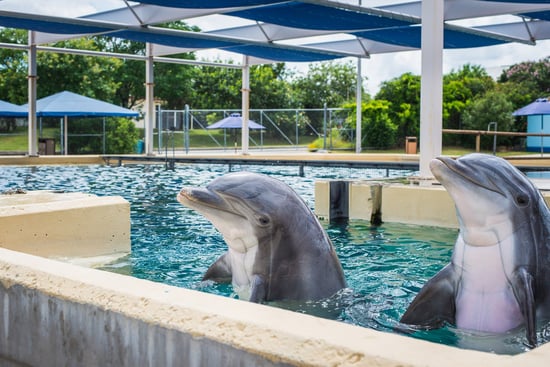
Join the boycott: Stop TUI Group's dolphin cruelty
By joining our boycott, you’re taking a stand against dolphin exploitation. Pledge to avoid all TUI products until they end their support for dolphin captivity.
Boycott TUI Group now