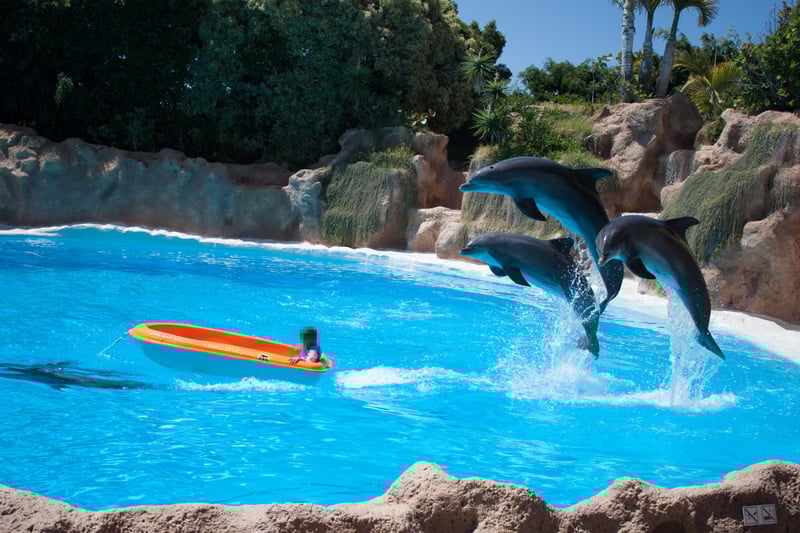
Marine scientists urge TUI to stop selling captive dolphin attractions
News
Twenty leading marine scientists have written to TUI Group CEO Sebastian Ebel, calling on the company to end its promotion and sale of captive whale and dolphin attractions. The open letter is published ahead of TUI Group’s Annual General Meeting on 10 February.
The scientists warn that captivity causes profound and irreversible harm to whales and dolphins and that no captive facility can meet their complex needs. They highlight that these animals are highly intelligent marine predators with social structures and communication systems, which are all vital to their wellbeing and cannot be replicated in tanks.
As a global tourism brand, the scientists say TUI Group holds significant influence over the industry and therefore has a responsibility to move away from wildlife attractions that cause suffering.

Captivity cannot be made ‘high-welfare’
The letter sets out clear scientific evidence showing that captivity fundamentally undermines cetacean welfare. It highlights that modern welfare principles, including autonomy and the ability to express natural behaviours, cannot be upheld for cetaceans in entertainment venues.
The scientists note that captive facilities cannot provide anything close to the space whales and dolphins use in the wild. Bottlenose dolphins, for example, often range across more than 100 square kilometres and regularly dive to depths that no captive environment can accommodate.
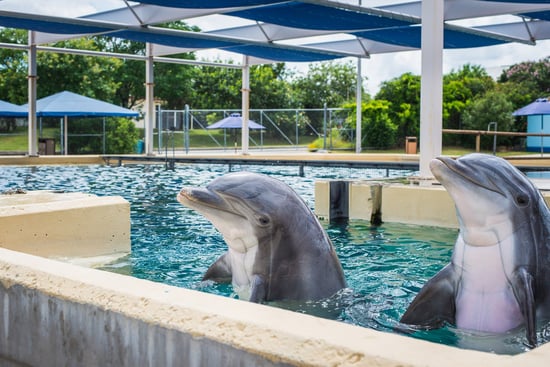
They also point out that restricted space prevents natural hunting and social behaviours, while the design of the tanks, their depth and the water treatment within are typically driven by visitor visibility rather than animal welfare. As a result, captive whales and dolphins often show stereotypic behaviours such as repetitive circling, which is a widely recognised sign of poor welfare.
Policy loopholes and continued promotion
TUI Group continues to sell and promote captive dolphin and whale entertainment despite repeated warnings from scientists and animal welfare experts.
In 2024, TUI Group updated its animal welfare policy, stating that breeding for commercial purposes was prohibited. However, the company continues to sell tickets to Loro Parque, which shortly afterwards announced the birth of a new orca calf now performing in shows alongside his mother, Morgan.
Following criticism, TUI Group amended its policy again, redefining commercial breeding as “the deliberate reproduction of animals for the primary purpose of commercial sale”. Scientists and campaigners say this revised definition allows the company to bypass the intent of its own welfare commitments.
Naomi A. Rose, PhD, Senior Scientist in Marine Mammal Biology at the Animal Welfare Institute (USA), said:
“Many dolphinaria either facilitate cetacean breeding through artificial insemination or by failing to prevent mating and conception in captivity through management means or chemical contraception. Captive cetacean breeding in entertainment venues does not contribute to conservation. The likelihood of any captive-bred cetacean (even from research facilities) ever being released to augment free-ranging populations is vanishingly small. Therefore, captive cetacean breeding is ultimately for commercial purposes, in order to sustain an industry that cannot provide for the welfare needs of these animals.”
Calls for accountability ahead of AGM
The letter reinforces the growing global consensus that whale and dolphin captivity for entertainment has no place in modern tourism.
Katheryn Wise, Wildlife Campaign Lead at World Animal Protection, said:
“TUI Group’s leadership is fully aware of the suffering these animals endure. While claiming to consider evidence from industry professionals, they continue to ignore the overwhelming consensus from marine scientists calling for a phase-out of this outdated and exploitative industry.
The tide is turning—governments, responsible travel companies, and tourists are rejecting dolphin and whale captivity. Yet TUI persists in promoting and profiting from venues such as Loro Parque, which continue to produce generations of whales and dolphins with no hope of release, condemning them to decades of misery. We urge TUI shareholders to use their voices to hold the company accountable.”
The reality behind the attractions
Last year, World Animal Protection published a report exposing the suffering of individual dolphins trapped in captive entertainment venues sold by TUI Group. The report includes the story of Missy, a 49-year-old dolphin captured from the wild, transferred between multiple facilities and now performing at ZooMarine, an attraction promoted by TUI Group.
We must take action and avoid booking holidays or experiences that support dolphin and whale captivity.
Join the boycott: Stop TUI Group's dolphin cruelty
By joining our boycott, you’re taking a stand against dolphin exploitation. Pledge to avoid all TUI products until they end their support for dolphin captivity.
Boycott TUI Group now