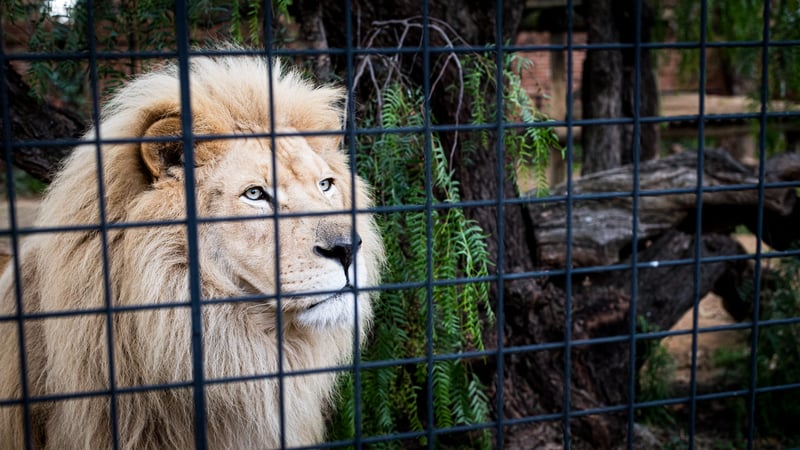
77% of UK tourists would reconsider visiting South Africa over captive lion breeding, new poll finds
News
A new poll has revealed that 77% of UK tourists would put off visiting South Africa if the country continues to allow lions to be bred and kept in captivity for profit.
The findings raise concerns about potential reputational damage, tourism losses and wider economic risks if the captive lion breeding industry is allowed to continue.
South Africa committed to phasing out commercial captive lion breeding in 2021, but progress has stalled. With a recent change in environment minister, there are growing concerns that the decision could be reversed.
Captive lion breeding has long been linked to practices such as cub petting, canned hunting and the export of lion skeletons, all of which have drawn strong international criticism.

New research suggests the consequences are not just ethical but also economic
The poll, commissioned by World Animal Protection in collaboration with Blood Lions, surveyed 2,528 people across South Africa, the UK, the US, the Netherlands and Germany. It found strong support for ending the industry, with three out of four respondents backing the government’s original plan.
Across key tourist markets, many said the existence of captive lion breeding would influence their travel decisions. Seven in ten people said they would avoid visiting a country where lions are bred and kept in captivity for profit. A similar number warned that reversing the phase-out would damage South Africa’s reputation as an ethical destination, while 65% said they would be more likely to choose alternative travel destinations if the industry continued.
Tricia Croasdell, CEO World Animal Protection said:
The poll shows that concern for lion welfare remains a powerful motivator. Protecting these animals is not just ethical - it's what the public expects. The world is watching how South Africa manages their natural heritage and tourists are making decisions accordingly.
UK tourists increasingly concerned
In the UK, concern is even stronger. Among 502 adults surveyed, 82% supported the decision to phase out captive lion breeding.
Many said it would directly affect their travel choices. More than three quarters would reconsider visiting a country that allows the practice, while 73% believe reversing the phase-out would harm South Africa’s reputation. The majority also said they would prefer to visit destinations that prioritise wildlife-friendly tourism.

What this could mean for South Africa
Tourism is a vital part of South Africa’s economy, contributing nearly 9% to GDP and supporting around 1.8 million jobs.
In 2025, the country welcomed almost 10.5 million international visitors, including more than 400,000 from the UK. If 77% of UK tourists were deterred from travelling, this could mean a loss of over 300,000 visitors. Based on current estimates, that could put nearly 24,000 tourism jobs at risk.1
By comparison, the captive lion breeding industry supports far fewer jobs, estimated at between 1,568 and 2,069.
South Africans also want change
Opposition to captive lion breeding is not limited to international tourists. The poll found strong concern within South Africa itself.
Most respondents said they do not support prioritising exploitative wildlife industries over ethical tourism. Many described captive lion breeding as unethical and warned that reversing the phase-out could damage trust in government decision-making. More than half said ending the industry would make South Africa a more attractive destination.
For many, concern for lion welfare was the strongest reason to support the phase-out.
South Africa’s commercial captive lion industry has been proven to be deeply problematic, creating issues around reputational damage, ethical and animal welfare concerns and zoonotic diseases. Our new polling data shows that failing to end this industry also risks serious harm to our vital tourism industry. We call on Minister Willem Aucamp to end the delays and uncertainty and urgently deliver the promised phase-out of this industry.
UK government still yet to act
The findings also come as the UK government continues to delay action on trophy hunting. The Hunting Trophies (Import Prohibition) Bill, which would ban the import of hunting trophies into Great Britain, has repeatedly been postponed in parliament.
Despite public opposition to trophy hunting and previous commitments to act, Labour has not yet introduced the legislation. World Animal Protection is calling on the UK government to honour its promise and bring forward the Bill.
1 Among the four key tourist markets, nearly 860,000 respondents (70% of 1,226,786 - the total number of international tourist arrivals in 2025 from the four key source markets, namely USA, UK, Germany & Netherlands) stated that they would be deterred from visiting South Africa if the country continued the keeping and breeding lions in captivity for profit.
Image credits: All photographs courtesy of Blood Lions