
New report finds most captive elephants in tourism still living in poor conditions
News
A new report has found that nearly seven in ten elephants used in tourism in Thailand are still living in poor or unacceptable conditions, despite growing public awareness and years of campaigning.
The report, Bred to Entertain, assesses the living conditions of 2,849 elephants across 236 tourism venues and reveals that 69% are kept in conditions that involve tight restraints, cruel training methods and little opportunity to express natural behaviour. Only 5% of elephants assessed were found to be living in what researchers describe as the best possible captive conditions.
The findings come at a critical moment in the UK, following the publication of the government’s new Animal Welfare Strategy. While the strategy commits to exploring ways to stop the domestic advertising of low-welfare animal activities abroad, the Animals (Low-Welfare Activities Abroad) Act has still not been implemented, more than two years after receiving Royal Assent. This delay means travel companies can continue to promote and sell tickets domestically to cruel wildlife attractions overseas, including elephant venues where animals are subjected to harmful conditions and training practices.
Long-term research shows limited progress
The study builds on more than 15 years of research into the elephant tourism industry in Thailand and shows that, while there have been some improvements, progress is slow and uneven.
Across all venues assessed:
- 69% of elephants live in poor conditions
- 26% live in “improved” conditions
- Just 5% live in the best possible captive conditions
Researchers were also concerned to find that the total number of elephants used in tourism has increased by 3% since the last full assessment in 2019. This is despite a global downturn in tourism during the COVID-19 pandemic and increased public concern about animal welfare.
“When tourists take part in activities that involve direct contact with elephants, they often don’t realise they are helping to sustain cruel practices,” said Dr Jan Schmidt-Burbach, Director of Wildlife Research and Veterinary Expertise at World Animal Protection, who has led the research since 2010. “These animals continue to endure confinement, stress and harsh training methods throughout their lives.”
Riding activities decline but harmful alternatives grow
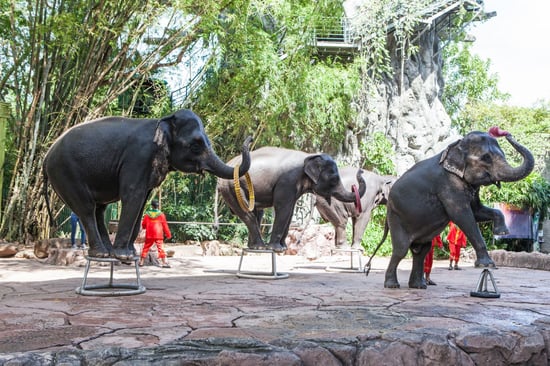
The report does highlight one encouraging trend, namely that the demand for elephant riding and circus-style shows has declined with fewer venues offering these types of activities.
However, this reduction has been accompanied by a sharp rise in experiences marketed as ‘ethical’ such as elephant washing or caretaker-for-a-day activities. According to the assessment, 54% of elephants are now used in washing or caretaking interactions, while only 7% live in venues where they are observed from a distance without physical contact. Observation-only experiences are considered the least harmful option for elephants.
“Travellers are increasingly avoiding elephant rides because they understand the harm involved,” said Dr Schmidt-Burbach. “But many are being misled into believing close-contact activities are kind or educational. In reality, these experiences rely on the same control, restraint and training that cause elephants to suffer.”
As calves, elephants used in tourism are often taken from their mothers and isolated from their families. They are often then subjected to intensive training methods designed to make them compliant around humans, frequently involving tools such as bull hooks, sticks or spears.
Close contact always comes at a cost to the animal
Researchers stress that any activity involving close contact with elephants requires strict control over animals who are powerful and unpredictable by nature.
“Bathing, feeding or touching elephants may appear harmless, but these activities are only possible through restraint and control,” said Katheryn Wise, Wildlife Campaign Manager at World Animal Protection. “Even experiences marketed as ‘gentle’ or ‘ethical’ are rooted in practices that compromise elephant welfare.”
Close contact also poses risks to people. Incidents where elephants injure tourists continue to occur. In early 2025, a 22-year-old Spanish tourist was killed during an elephant washing activity in Thailand, highlighting the dangers these attractions create for animals and visitors alike.
Even experiences marketed as ‘gentle’ or ‘ethical’ are rooted in practices that compromise elephant welfare.
A call for action from the travel industry
Global travel companies must stop promoting or selling tickets to hands-on wildlife encounters. Genuine elephant sanctuaries would never offer riding, washing or close-contact experiences.
We at World Animal Protection work with travel companies and local partners to support a shift towards experiences that promote watching elephants responsibly in the wild or at genuine, observation-only sanctuaries that prioritises elephant welfare while protecting livelihoods. Our long-term research shows that public awareness and industry engagement can drive change when clear standards and alternatives are in place.
“Our research shows people want to make kinder choices,” said Dr Schmidt-Burbach. “The move away from riding is encouraging, but it must not be replaced with new forms of exploitation disguised as ethical tourism. Without stronger action, too many elephants will continue to suffer.”
Become part of the community
Join thousands of animal lovers fighting to protect wildlife and give farmed animals good lives. Sign up now for emails with ways you can help.
Sign up now