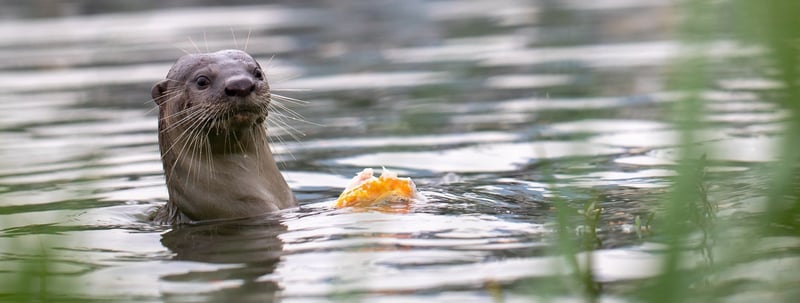
10 interesting facts about otters
Blog
Today is World Otter Day! Let's take a moment to celebrate these unique animals and raise awareness of the threats they face.
Otters are often seen as playful and curious, but there’s a lot more to them. In the wild, they’re intelligent predators with complex behaviours, and they play a crucial role in keeping river and coastal ecosystems healthy.
Sadly, many otter species are under threat due to habitat loss, pollution, and the illegal wildlife trade.

10 facts you might not know about otters
1. There are 13 species of otter around the world
From the tiny Asian small-clawed otter to the giant otter of South America, there are 13 recognised otter species. Sadly, almost all of them are in decline, with several now considered vulnerable or endangered.
2. Otters play an important role in nature
Otters help keep ecosystems healthy by controlling prey populations and maintaining balance in rivers, wetlands and coastal habitats. When otters disappear, it can be a warning sign that something in the wider environment is going wrong too.
3. They’re surprisingly clever
Otters are brilliant problem-solvers. Some have been seen using rocks to crack open shellfish, and they are thought to have strong memories that help them return to successful hunting spots and teach their young where to find food.
4. Family life matters to otters
Some otter species are incredibly social. Giant otters, for example, live in close family groups where parents raise pups together, and older siblings often help too. Those family bonds play an important role in helping young otters learn how to survive.
5. Some otters are being taken from the wild for the exotic pet trade
In parts of Southeast Asia, otters are increasingly targeted by the exotic pet trade. Baby otters are often taken from their families and sold online, ending up in captivity where their complex needs simply cannot be met.
6. They’re losing their homes
Like so many wild animals, otters are under pressure from habitat loss. Wetlands are disappearing, rivers are becoming polluted, and coastal areas are being developed, leaving less safe space for otters to live and breed.
7. Their fur has made them a target
Otters have incredibly dense fur, the thickest of any mammal. It helps keep them warm in cold water, but it also made them a major target for the fur trade. While large-scale hunting has declined, illegal poaching is still a threat in some places.
8. Human activity can disrupt them
Otters can be sensitive to noise and disturbance, especially around breeding areas. Busy waterways, riverside development and increased human activity can push them away from the habitats they rely on.
9. Not all otters spend all their time in water
Otters are famous swimmers, but some species spend much more time on land. The Congo clawless otter is one example, and because of that, scientists still know relatively little about them.
10. Helping otters means protecting nature
Healthy rivers, wetlands and coastlines are essential if otters are going to thrive. Supporting habitat protection, responsible tourism and stronger action against wildlife crime can all make a real difference.
Join our community
Animals need our protection
Every day billions of animals are experiencing unbearable cruelty. We tackle the root causes of their suffering so that we make the biggest difference to their lives. By signing up for our emails you are joining a community that helps change the lives of animals. Forever.
Join us