The real cost of cheap meat
Blog
That £3.50 pack of pork chops might look like a bargain. But the true cost is often paid elsewhere by animals, nature and our health.
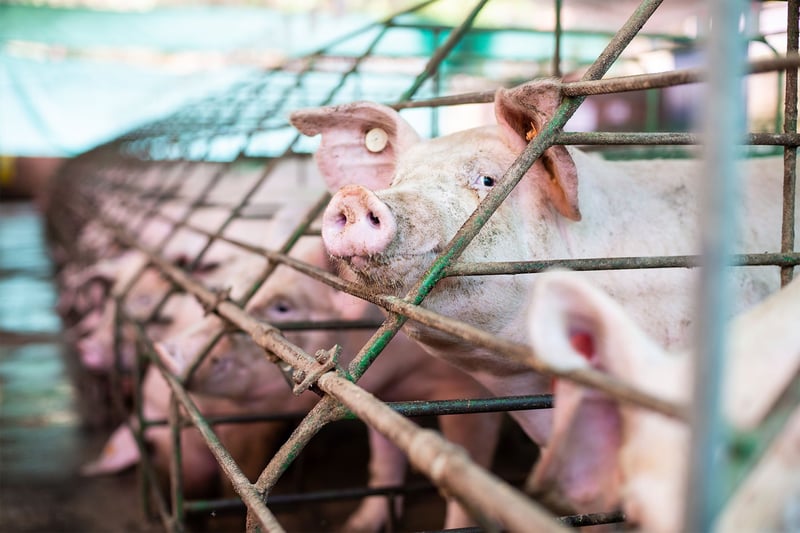
Factory-farmed meat looks cheap because many of its real costs are hidden. They don’t appear on the label or at the till. Instead, animals, nature and taxpayers pay the price.
Here’s what that looks like in practice:
-
Forests destroyed for feed
Feed for factory farms often comes from land cleared of forests overseas, while waste from intensive animal farming pollutes rivers and damages soil. -
Animals confined and denied natural lives
On factory farms, pigs, chickens and cows spend their lives in crowded sheds with little space to move. They cannot explore, forage or socialise naturally. Many become sick or injured and are given routine antibiotics instead of better living conditions. -
A growing risk to human health
The overuse of antibiotics in farming contributes to antibiotic resistance, making some infections harder to treat. Superbugs already kill thousands of people each year and cost the NHS millions.
When all these costs are added up, to animals, people and the planet, factory-farmed meat no longer looks cheap.

At Brodoclea Woodland Farm in Scotland, pigs live freely across 430 acres of woodland. They root, forage and wallow naturally. Their pork costs around £6.20 per kilo, compared with £2.04 for factory-farmed pork. But with small payments of around £113 per acre for the benefits these farms provide for nature, such as improving soil and supporting wildlife, the prices could be almost the same.
We’re not counting the benefits of good farming or the costs of bad farming. Once we do, higher-welfare, nature-friendly farming makes sense for everyone.
So the real question isn’t whether we can afford better farming. It’s whether we can afford to ignore the harm caused by cheap meat.
By choosing higher-welfare, sustainable food and supporting policies that protect animals, we can help build a food system that is fairer for animals, better for people, and kinder to the planet.
Read more about our Just Transition work
A Just Transition means supporting farmers to move away from industrial systems without losing their livelihoods.
Find out more