Inside TUI Group’s AGM and the questions they avoided
Blog
Sanne Kuijpers, Programme Lead at World Animal Protection Netherlands, attended TUI Group’s 2026 Annual General Meeting in Hanover to raise concerns about the company’s continued promotion of captive dolphin and whale entertainment. Here, she shares what happened.
The previous two meetings we joined were held online. This time, the event took place in Hanover at the International Congress Centre. On the way to the venue, I passed posters we had arranged calling on TUI to stop profiting from dolphin suffering. There was even a short video playing on the tram.
The meeting itself was busy, with hundreds of attendees. Some had come to listen, others to raise questions, while many more joined online.
My question to the board was:
With competitors like DERTOUR evolving and your continued sale of captive dolphin venues increasingly viewed as a reputational risk and potential greenwashing concern, how is the company assessing the true cost to its brand and shareholder value? Do the returns from these attractions genuinely outweigh the risks?
What happened next was striking
Immediately after my question, Christoph Kiessling, Vice President of Loro Parque and son of the park’s founder, took to the stage. There was no direct question, just a lengthy defence of Loro Parque. The timing felt difficult to ignore.
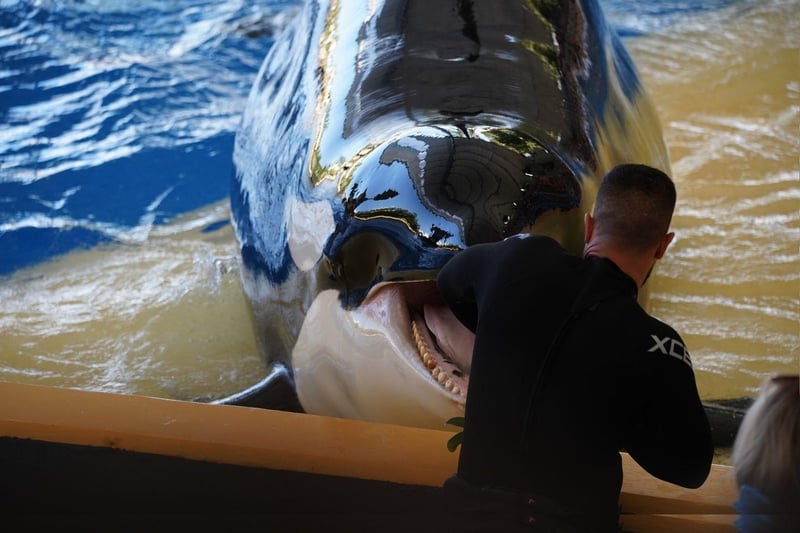
Loro Parque remains one of Europe’s most controversial captive dolphinariums, continuing to breed dolphins and orcas. As more travel companies and governments distance themselves from dolphin entertainment, the industry appears increasingly reliant on companies such as TUI maintaining support.
Also positioned near the stage was a veterinarian associated with SeaWorld, who argued that nature is inherently dangerous and advocated for keeping orcas in captivity. She stated that animal health is science, not opinion.
We agree entirely. Which is precisely why an open letter signed by 21 world-renowned marine scientists was sent to TUI’s CEO days before the meeting. Her own question focused on whether TUI would consider establishing an independent advisory board to inform decision-making.
Another speaker, the chairwoman of the Association of Independent Self-Employed Travel Agencies, echoed support for TUI’s position. She suggested the company should not be pressured by minority groups, referring, presumably, to animal welfare organisations and the hundreds of thousands of supporters calling for change.
Finally, it was the CEO’s turn to respond. The answer to my question was brief and, ultimately, disappointing. He said the matter had already been addressed, adding that the views expressed by previous speakers reflected his own. He pointed again to TUI’s welfare audits as reassurance.
But perhaps the first question any audit should ask is a simple one:
Is a highly intelligent, socially complex marine predator being kept in a tank?
If the answer is yes, the conclusion is equally simple. It is not good enough.
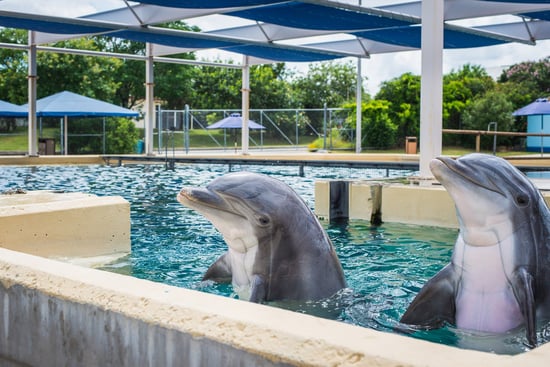
Join the boycott: Stop TUI Group's dolphin cruelty
By joining our boycott, you’re taking a stand against dolphin exploitation. Pledge to avoid all TUI products until they end their support for dolphin captivity.
Boycott TUI Group nowRead more about dolphin and whale captivity
-
World’s saddest birthday for captive orca Teno
News
Teno the orca turns one in captivity. Campaigners call on tourists to avoid whale and dolphin shows at...
-
Inside TUI Group’s AGM and the questions they avoided
Blog
Attending TUI Group’s 2026 AGM offered an opportunity to question the company’s stance on captive dolphin and whale...
-
Scientists urge TUI to stop selling dolphin and whale...
News
Twenty leading marine scientists have written to TUI Group urging the company to end the sale of captive...
