January is one of the biggest months of the year for booking holidays. For many of us, it’s when we start dreaming about warm weather, time to switch off, and fun experiences with the whole family.
As we plan our getaways, it’s worth pausing to think about the impact of our holiday choices and stay informed about which tour operators still profit from animal cruelty and exploitation.
TUI still profits from ticket sales to cruel dolphin shows
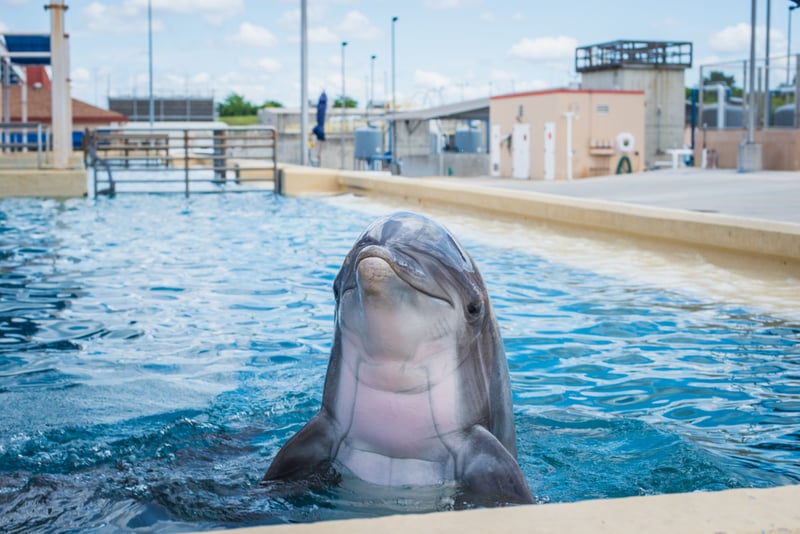
Dolphins are often marketed as the smiling, happy stars of the show. But the reality of life in captivity is very different from the happy image sold to unknowing tourists.
Despite growing awareness of the harm and extreme suffering caused by dolphin shows, TUI Group continues to profit from this cruelty by selling tickets to venues where dolphins and whales are kept in barren tanks and made to perform tricks for tourists. These attractions exist because they are actively promoted and sold by large tour operators like TUI.
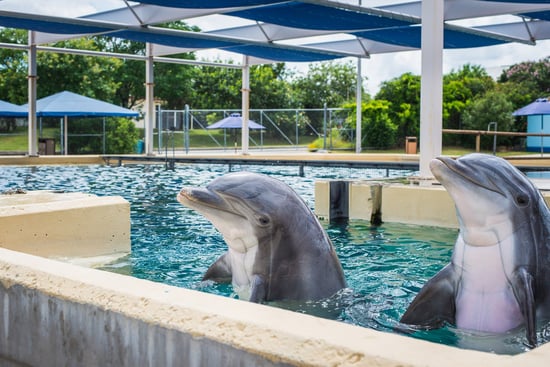
Dolphins and whales are highly intelligent, social animals. In the wild, they travel vast distances, form close family bonds and make complex decisions every day. In captivity, they are confined to tanks that are around 200,000 times smaller than their natural ocean habitats.
Many dolphins in entertainment venues show clear signs of distress. These include repetitive behaviours such as swimming in tight circles, head bobbing and tail slapping, which are all indicators of psychological suffering. Others develop skin wounds from constant handling during “swim-with” interactions or altercations with tank-mates, or damaged teeth from chewing on tank walls out of frustration and boredom.
Captive dolphins are often forced into unnatural social groupings with unfamiliar animals, leading to ongoing stress and aggression. In the wild, dolphins can swim away from conflict. In a tank, they have nowhere to escape.
Entertainment at a cost
The tricks and performances seen in dolphin shows are not natural behaviours. Dolphins are trained to perform by being made to do tricks in exchange for food, which is typically frozen fish. Loud music, cheering crowds and constant human interaction add to the stress of an already restrictive environment.
Some dolphins and whales can live for more than 40 years. That can mean decades spent in barren tanks, performing day after day, with no opportunity to live as they would in the wild. Only recently, Kshamenk, often described as the world’s loneliest orca, died after 33 years in solitary confinement in Argentina. His suffering and that of countless dolphins and whales that live in captivity around the world is made possible by an industry that continues to profit from their exploitation. Just before Christmas, Katina, an orca who had spent 47 years in captivity, died at SeaWorld.
Despite growing public concern, dolphin and whale entertainment remains a profitable industry and sadly one that is still supported by some major travel companies.
Why we’re calling for a boycott of TUI
TUI Group is currently the last major European holiday provider still selling tickets to dolphin entertainment venues. Other major European tour operators, including Jet2holidays and Dertour Group, have already stopped selling tickets to these attractions, showing that change is possible.
Despite years of pressure from scientists, animal welfare organisations and the public, TUI continues to profit from attractions where dolphins and whales are kept in captivity for human amusement. By doing so, it helps sustain a system that causes lifelong suffering for intelligent, sensitive animals. Over 400 dolphins are currently held in venues promoted by TUI Group, many of them in tanks far too small to meet their physical or emotional needs.
Boycotting TUI will show them that their customers care and that cruelty does not belong in tourism.
Boycott TUI Group now, it only takes 2 minutes
Choose kinder alternatives
If seeing dolphins or whales is on your holiday wish list, there is a better way. Responsible whale and dolphin watching in the wild allows animals to live freely, on their own terms, without being forced to perform.
Around the world, including here in the UK, there are opportunities to observe whales and dolphins responsibly in the wild. Programmes like Wildlife Heritage Sites recognise destinations that protect marine mammals and support local communities, offering unforgettable experiences without causing harm.
This January, book with animals in mind
Our holiday choices matter. Please choose responsible wildlife experiences, and boycott companies that profit from animal suffering. We can help protect dolphins and whales from a lifetime in captivity by making the right decisions.
Join the boycott: Stop TUI Group's dolphin cruelty
By joining our boycott, you’re taking a stand against dolphin exploitation. Pledge to avoid all TUI products until they end their support for dolphin captivity.
Boycott TUI Group now