How caring for farmers and animals goes hand in hand
Farming has never been an easy job. Long days, financial pressure and constant uncertainty can weigh heavily on farmers’ physical and mental health. At the same time, many of us are increasingly concerned about how farm animals are treated. What is often overlooked is how closely these two issues are connected.
Evidence shows that farmer wellbeing and animal welfare are deeply linked. A large One Welfare scoping review, which looked at more than 10,000 scientific papers, dentified 94 pieces of evidence that directly measured this relationship. 99% of them showed that better farmer wellbeing is linked with better animal welfare, and vice versa.
This review brought together studies from many farms and different kinds of livestock, using a range of wellbeing and welfare indicators. It showed that when farmers have good mental and physical health and feel supported, animals are more likely to be calm, healthy and well managed. Also, higher standards of animal welfare can boost farmers’ satisfaction and reduce stress.
All of this shows that looking after farmers isn’t just good for people, it’s good for farm animals too. And that’s exactly why a Just Transition in UK farming matters.
What is a just transition in farming?
A just transition is about moving towards a food system that works better for everyone. It recognises that change is needed, but also that farmers and rural communities must not be left to shoulder the burden alone.
In practice, this means helping farmers shift away from intensive factory farming and towards approaches that are better for animals, people and the environment. It is about creating the right conditions through policy, investment, training and support so that more humane and sustainable farming becomes the viable, secure choice.
Rather than reinforcing systems that drive animal suffering and environmental damage, public funding and political leadership should encourage farming models that:
- Prioritise animal welfare
- Work with natural processes
- Provide stable and dignified livelihoods
- Deliver good food for people
This is not simply about removing harmful practices. It is about building a future in which farmers can thrive alongside the animals and landscapes they depend on.
A fairer food system is possible. But it requires deliberate, joined up action that considers both human and animal wellbeing.
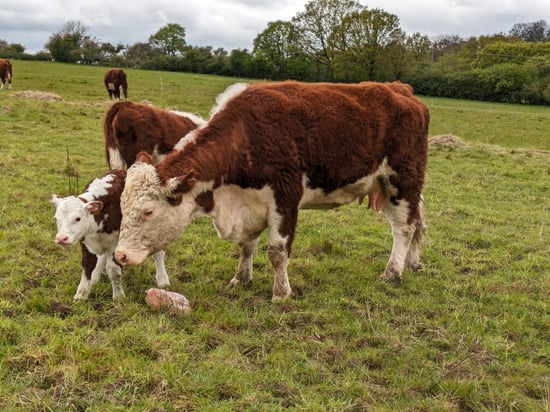
A Just Transition for UK farming
It's not about less farming - it’s about better farming, where people, animals, and the planet thrive.
Find out more