Call for an end to cruel factory farming
Sign our petition to the UK government and let them know that there is no future for factory farming.
World Animal Protection UK
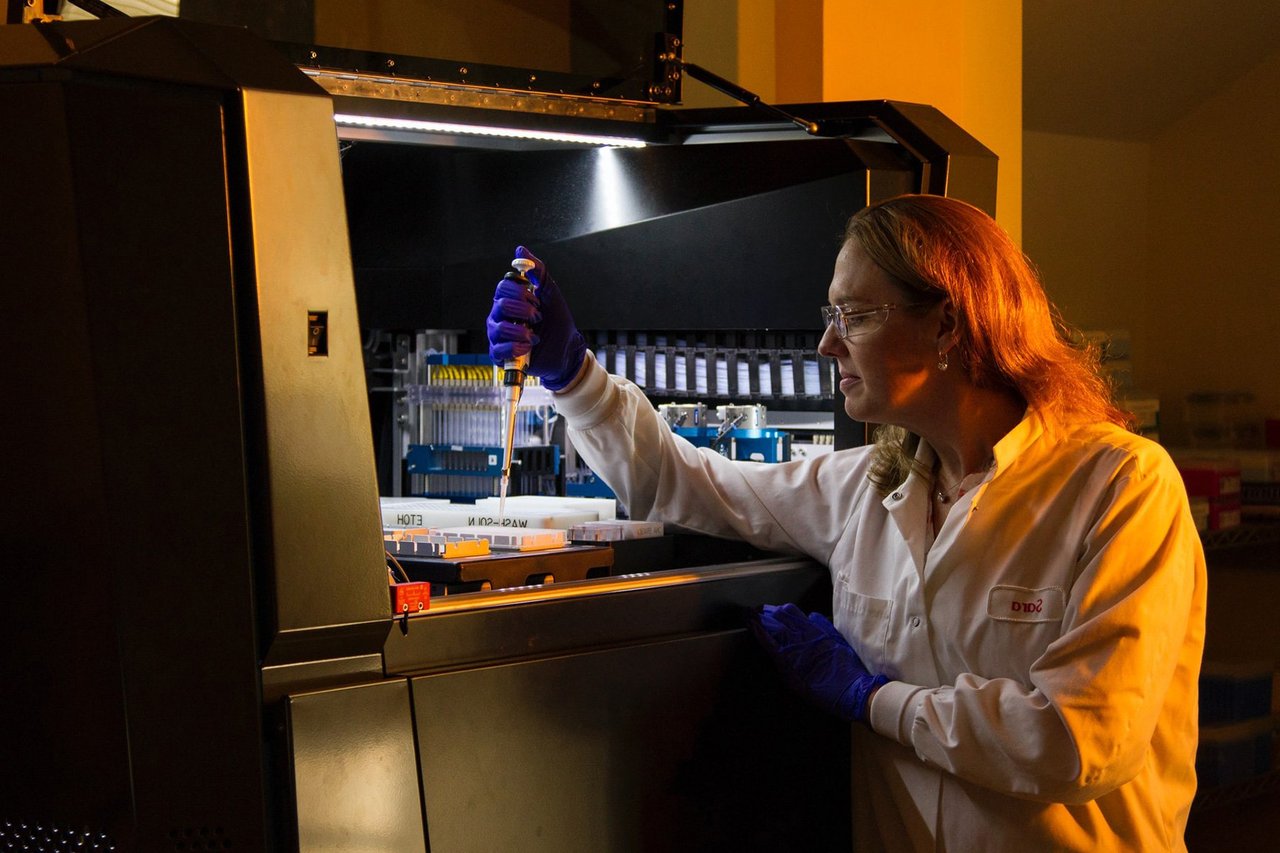
Rising demand for cheap meat is driving superbugs, new diseases, poor diets, and dangerous pollution from factory farms, putting people and communities at risk.
Factory farms could be breeding grounds for the next pandemic. The cramped, dirty, stressful conditions in factory farms are the perfect incubators for new viruses. When these viruses jump to humans they’re known as ‘zoonotic diseases’, and they can cause serious illnesses we don’t know how to contain or treat. Shockingly, the UN has found that more than half of all new illnesses in people since 1940 came from intensive farming.
The vast quantity of cheap meat produced by factory farms is driving up rates of obesity and chronic illness. Studies have shown that intensively reared meat tends to contain more fat and lower levels of important nutrients than higher welfare products. It’s also used in low cost processed foods that are often laden with salt, sugar and additives. At the same time, factory farming is replacing local, sustainable food production, undermining nutrition and worsening the risk of hunger for millions of people.Poor conditions in factory farms make them hotspots for parasites and bacteria. Globally, around 35% of all foodborne diseases are linked to meat, dairy or eggs.
Factory farms produce vast quantities of urine and manure, which pollute our air, rivers and soil. We don’t yet know the full impact of this on people. But 400 harmful gases released by factory farm waste have been linked to higher rates of illness and breathing problems in people who live nearby. The fertilisers and pesticides used to grow animal feed can also disrupt our hormones, and are thought to cause a range of human health problems.
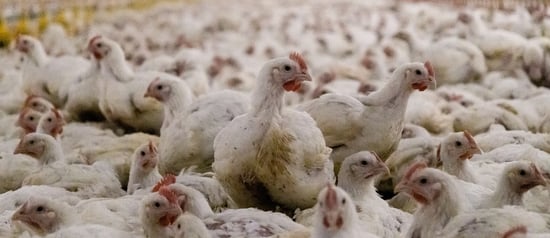
Sign our petition to the UK government and let them know that there is no future for factory farming.
Factory farms drive the growth of superbugs that cause life-threatening infections which can’t be treated with antibiotics. Animals are kept in cramped, filthy conditions and dosed up with antibiotics to prevent and treat illness, and speed growth.
Incredibly, up to 75% of the world’s antibiotics are used in factory farms. But if these vital drugs are overused, deadly strains of disease can mutate to resist their effects. These resistant bacteria can reach people through meat, water, soil, air and farm workers. If antibiotics stop working, simple infections and routine medical procedures could become life-threatening.
Antibiotic-resistant infections kill 1.27 million people each year, and rising. But the solution is simple. If the routine use of antibiotics in factory farms are banned, we could massively reduce the risk of deadly new superbugs emerging.
Our government could make that happen, but it’ll take thousands of us calling for action.
Blog
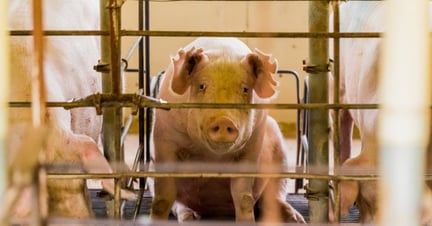
There's a ticking timebomb in factory farming that could make our public health crisis even worse: superbugs. 700,000 people die from superbugs each year.

News
Our report reveals rivers are awash with superbug pollution around UK factory farms. Urgent government action is needed to prevent a potential health crisis.
Blog
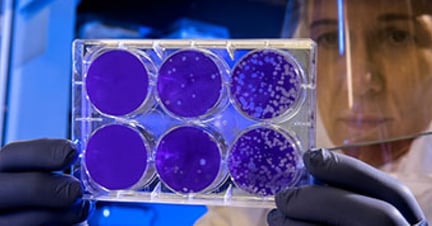
What is a superbug? And how does this impact us? Scientists have confirmed the unstoppable spread of superbugs travels from pig to human.
Will you tell the UK government to block all new factory farms?
With your support, we’re campaigning hard to address the health risks of factory farming, and building a powerful movement to end the cruelty of intensive agriculture for good.
Join thousands of animal lovers fighting to protect wildlife and give farmed animals good lives. Sign up now for emails with ways you can help.
Sign up now